
Licensing & Transactions
Buying, Selling and Licensing Pharmacies in California
Selling a pharmacy isn’t like selling most businesses. The permit doesn’t simply pass to the buyer, the PBM contracts don’t transfer on their own, and the DEA registration has its own rules. A deal that closes on paper can still leave the new owner unable to dispense or bill on day one. I’ve bought, built and sold pharmacies myself, including a specialty infusion pharmacy I sold to private equity. I draft the purchase agreement and handle the licensing together, so the two don’t work against each other.
Buying or Selling
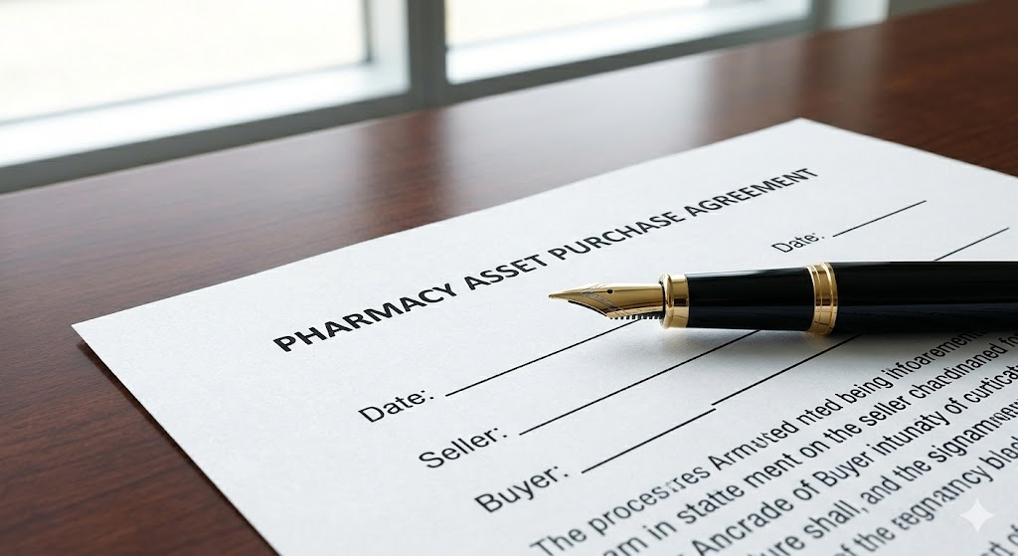
Pharmacy Purchase and Sale Agreements
Most of my transactional work is for independent owners on one side of a sale. I represent buyers and sellers.
Asset and stock purchase agreements
I draft and negotiate the agreement, whether it’s an asset purchase or a stock purchase. Each one addresses the risks specific to pharmacy: inventory counts and valuation, controlled substance transfer, prescription files and patient records, PBM contract assignment, audit and recoupment exposure for claims billed before closing, and the indemnity and holdback that protect against them.
Due diligence
Before you commit, I review the seller’s license history, Board of Pharmacy inspections and discipline, PBM audits and network terminations, and DEA compliance. A buyer can inherit a predecessor’s problems, especially when the pharmacy keeps its NCPDP number.
For sellers
A clean sale for a seller means getting paid at closing and not being pulled back in afterward. I focus on how the price is paid, what the seller warrants, how long those promises last, and what happens to audits on claims you billed before the sale.
Change of Ownership
Change of Ownership Without a Gap in Service
A California pharmacy license belongs to its owner. A new owner needs its own license from the Board of Pharmacy, and in many deals a temporary permit keeps the doors open while the Board processes the application. I manage the filings that have to line up around closing:
- California Board of Pharmacy change of ownership application and temporary permit
- DEA registration for the new owner and the transfer of controlled substances
- NPI, NCPDP and Medicare or Medi-Cal enrollment updates
- PBM and payer credentialing for the new owner
The timing of these filings is written into the purchase agreement, so the closing date and the licensing timeline match.
Licensing
California Pharmacy Permits and Licensing
New community pharmacy permits
The Board of Pharmacy application, the affidavits for every owner and officer, the pharmacist-in-charge, and the supporting documents. I prepare the full application for you to sign, so you’re not left filling out Board forms yourself.
Specialty, infusion and sterile compounding pharmacies
Permits and the added licensing a specialty or sterile compounding pharmacy needs, from a founder who built one.
Nonresident pharmacy permits
Pharmacies outside California that ship to California patients need a California nonresident permit. As of July 1, 2026, that includes a California-licensed pharmacist-in-charge. I handle the application from start to finish.
Expanding beyond California
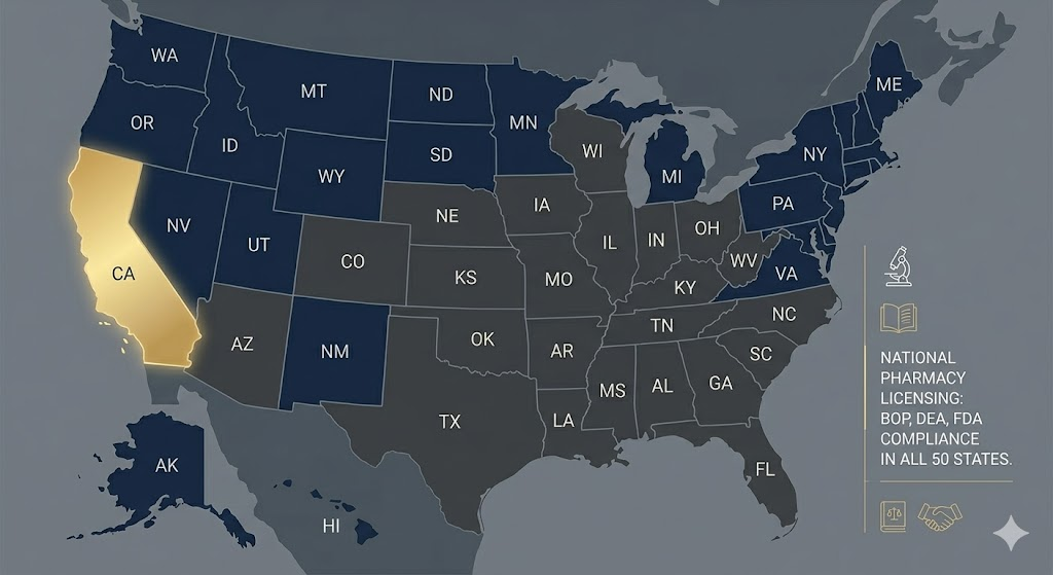
I also handle pharmacy licensing in all 50 states, so a California pharmacy that wants to ship across state lines can license through one office.
NPI, NCPDP and federal registrations
Provider identifiers and DEA registrations set up or updated to match the new entity or ownership.
Structure
Structuring a Pharmacy Business
As a pharmacy grows, its ownership and management setup has to keep up with both the regulators and the investors. I advise on entity choice, shareholder and operating agreements, management services arrangements, and ownership structures that bring in investors without losing control of compliance.
Questions About Buying, Selling and Licensing a Pharmacy
Does the pharmacy license transfer to the buyer?
No. In California a pharmacy license belongs to its owner, so a new owner applies for its own. The Board may issue a temporary permit so the pharmacy can keep operating while the application is processed. The purchase agreement should plan around that timeline.
How long does a change of ownership take?
It depends on the Board’s processing time and how complete the application is when it goes in. Plan for months, not weeks, and start the licensing work when the agreement is signed, not at closing.
Should I buy the assets or the company?
It depends on the deal. An asset purchase usually leaves the seller’s past liabilities behind, but it means new licenses and new contracts. A stock purchase keeps the existing entity, including its history. I’ll walk through the tradeoffs for your deal, along with your accountant on the tax side.
What happens to PBM audits on claims billed before the sale?
PBMs can audit claims for a period after they are paid, and they can seek recoupment from the pharmacy that billed them. The purchase agreement should say who bears that risk and how it is secured, usually through an indemnity and a holdback.
What happens to the DEA registration when a pharmacy is sold?
It doesn’t simply pass to the buyer. The new owner generally needs its own registration, and the controlled substances transfer under DEA rules, with an inventory taken at the handoff. I build this into the closing timeline.
Can the buyer run the pharmacy before the Board approves the change of ownership?
Only under a license the Board has issued. That’s why the temporary permit matters. It lets the new owner operate while the permanent license is processed, so the closing date should be planned around it.
What does due diligence on a pharmacy cover?
License and inspection history, Board and DEA compliance, PBM contracts, audit history and network status, payer mix, inventory and controlled substance records, the lease, and staff. What turns up shapes the price, the indemnity and the holdback.
How long does a new California pharmacy permit take?
Months. Board processing times vary, and the most common delay is an incomplete application. A complete, consistent package is the best way to shorten the wait.
Do I need a California permit to ship prescriptions into California?
Yes. A pharmacy outside California that ships, mails or delivers prescriptions to California patients needs a California nonresident pharmacy permit. Sterile compounding for California patients needs a separate nonresident sterile compounding license.
What is a pharmacist-in-charge, and do I need one?
Every California pharmacy needs one. The pharmacist-in-charge is responsible for the pharmacy’s compliance with pharmacy law, must complete the Board’s PIC training, and is named in the permit application. For nonresident pharmacies, the PIC must now hold a California license.
Do you handle licensing outside California?
Yes. I handle nonresident pharmacy permits for pharmacies shipping into California, and licensing in other states for California pharmacies that want to expand.
These answers are general information, not legal advice for your situation. Reading this site or contacting me does not create an attorney-client relationship.
Facing a Board of Pharmacy inspection, accusation or PBM audit? See Regulatory Defense.
Planning a Purchase, Sale or New Pharmacy?
The earlier I’m involved, the more the agreement and the licensing can be planned together. Tell me where the deal stands and I’ll lay out what comes next.
Email: b@jdacumen.com
Phone: (909) 618-7299
Orange County, California. Serving clients statewide.